
GigCapital Global (GigCG)
Dr. Avi Katz
Founding Managing Partner
& Executive Chairman
1731 Embarcadero Rd, Suite 200,
Palo Alto, CA 94303
+1(408) 930-9338
Avi@GigCG.com
November 17, 2025
$1.5 Billion for Israeli Defense Acquisitions: SPAC Companies in ComebackSPAC companies return to the stage and raise huge sums of money • Israeli investors are leading the new wave on Wall Street, with the focus being Israel’s defense companies
SPACs, publicly traded skeletons that were established specifically for the purpose of merging a private company into them, became the object of ridicule at the beginning of the current decade. They promised to help promising companies enter the stock exchange “through the back door,” but in practice, most of the mergers yielded medium-sized companies that lost tens of percent of their value, leaving investors with a bitter taste in their mouths.
Today, SPAC companies are making a comeback: with the opening of the IPO market in the middle of this year and the reduction in interest rates, they are raising hundreds of millions of dollars and connecting to another trend, one that has become a hot commodity among defense industry investors who dream of their own Palantir or Andoril – that is, a small startup that is growing rapidly and is challenging the existing defense giants with smart, agile and AI-rich products. Others are impressed by the defense stocks, such as Elbit’s shares, which overtook Teva last summer and briefly became the second most valuable Israeli company on Wall Street.
There are also objective circumstances: the rise in defense spending in the United States and Europe, the need to meet the challenges of the Trump era – including the acquisition of drones, drones and low-flying satellites – as well as the fear of the post-quantum era, in which encryption could be easily breached, are leading Western militaries to close large and rapid contracts with defense startups. This is armament on a scale not seen since the days of the Cold War.
Israeli SPACs occupy the U.S.
SPAC investors are showing special interest in Israeli companies, and many see the establishment of the TASE skeleton as a tool to attract growing companies looking for exposure to the US market – including investors, customers and partners in establishing production plants on US soil.
In the United States alone, more than $600 million has been raised in recent months for three SPAC companies headed by Israelis: Avi Katz, a veteran SPAC investor living in New York, raised $253 million for GigCapital, the SPAC fund he is designating for Israeli acquisitions in the field of defense-tech; And Meni Shalom, CEO of the holding company Nukkleus, which is engaged in the acquisition of defense companies, announced his intention to raise $150 million last month as part of a new SPAC company called “SC II.”
Avi Katz of GigaCapital has been specializing in SPAC fundraising for two decades – even before the industry became vilified – and is considered the most conservative of them. He is one of the few who has remained faithful to the format and also manages to show a return to his investors in this way. Last month, he merged with SPAC, which recruits an American company that manufactures nuclear microreactors to operate a data farm at a valuation of $1.2 billion, and in SPAC, which he founded in 2021, he issued the artificial intelligence company Big Bear, which is currently traded at a valuation of $2.5 billion.
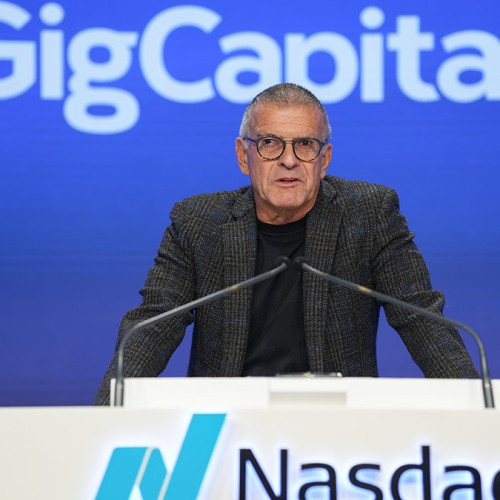
And last Friday, it was Katz who rang the opening bell on Nasdaq for the 18th time in his career. In preparation for his eighth SPAC enlistment, Katz recruited his former naval comrades – retired Corps Commander Maj. Gen. (res.) Dudu Ben Ba’Shem Tov and former head of the Equipment Shipyard, Brig. Gen. (res.) Omri Dagol. They were joined by former U.S. Ambassador to Romania Adrian Zuckerman, who on behalf of the Trump administration negotiated bilateral agreements to renew the Romanian military and resume the activity of nuclear reactors.
Katz explains: “In 2021, there was a SPAC bubble that created a bad name for the move. Many entrepreneurs and investors thought they could make quick money, and many companies with absurd valuations failed. We distanced ourselves from these values and did not allow the investment bankers to take the parts they took back then. Instead, we focused on areas where we believed in and acted conservatively, making sure to raise between $200 million and $250 million per SPAC.”
Companies from Israel in the capital market? “Complicated”
It’s not just the SPAC companies that are eyeing the defense sector, but foreign holding companies that specialize in mergers and acquisitions are also raising capital: Ondas Holdings, which is managed by American founder Eric Brook and former chief engineering officer, Brig. Gen. (res.) Oshri Lugasi, has also raised $800 million in shares and options as part of four Nasdaq sub-offerings since last June, which are mainly used to acquire Israeli companies.
A few months before the “Iron Swords” War, Ondes gambled on the acquisition of Aerobotics, an Israeli drone company that protected power plants, which was traded on the Tel Aviv Stock Exchange and had trouble growing. The company has turned it into a dominant combat drone company – both for reconnaissance missions and for attacking other aircraft.
“The idea of taking Israeli companies into the capital market and operating abroad sounds good, but in reality it’s complicated,” says a senior defense market official familiar with the SPAC companies’ activities. “They need special permits and have to go through the Ministry of Defense in Israel – it’s not a simple matter. That’s why it’s easier to start creating an Israeli holding group that works with the Israeli defense establishment, as they did in Bonds.”